
Breaking Into Publishing: A Guide for Graduates

Updated: Dec 30, 2025
I know from our fantastic Publishing Academy students that landing your first role in publishing can feel like trying to crack a code! Especially when job titles seem designed to confuse rather than clarify. From confusing job titles to vague entry requirements, many graduates have the abilities, but just don’t yet understand how the industry actually works. I've seen talented candidates applying for the wrong roles, overlooking realistic entry points, or spending months gaining work experience that hiring managers don’t value.
These are exactly the issues we unpack with students inside the Fly on the Wall Press Publishing Academy.
I could talk for hours about how to get into publishing - from useful experience to gain,, to networking, to mentoring, where and how to learn about each department, how to practice practical skills... but below we're just going to start with two elements - what kind of roles are actually graduate/entry-level friendly (when you see a job advert, which ones actually require some in house experience and which don't?) and also what kind of experience you can get yourself for editorial roles in particular (we will start with editorial, as it is the most competitive department!)

Firstly, who am I? :)
My name is Isabelle Kenyon, I am the CEO of Fly on the Wall Press (Small Press of the Year in 2024, British Book Awards, North) and MA Module Leader in 21st Century Publishing, Arts University Bournemouth. In September 2025 I launched The Publishing Academy, a new online learning hub and forum designed to help aspiring professionals gain practical skills and connections in publishing. Aimed at recent graduates, career changers, and anyone curious about the industry, the Academy offers hands-on training across the full publishing process — from editorial and contracts to marketing, rights, and publicity — alongside a monthly programme of webinars and keynote events with industry experts.
No experience is required — just curiosity and a willingness to learn. As someone who created a publishing company with no experience whatsoever, and a whole lot to learn along the way, I want to make publishing transparent, inclusive, and within reach, beginning especially with the areas outside of London!
Onto how to decode job advertisements...
Decoding Job Titles: The "Assistant" Rule

The position of the word "assistant" in a job title tells you a lot about whether the role is entry-level or not :)
Editorial Assistant, Marketing Assistant, or Rights Assistant? These are typically graduate-friendly positions. When "assistant" follows the department name, you're looking at an entry-level role designed for people starting their publishing careers.
Assistant Editor, Assistant Marketing Manager, or Assistant Rights Director? These positions usually require prior experience. When "assistant" comes before the job title, it generally indicates a more senior role supporting someone at management level.
This distinction might seem small, but it can save you hours of application time and help you target the right opportunities!

Why Editorial Roles Are So Competitive
If you're passionate about working directly with manuscripts and authors, you should know that editorial is the most competitive side of the publishing market. I am absolutely not saying that you shouldn't pursue your dream career, but this is the department that attracts the most applicants, which means breaking in requires strategy and persistence.
The good news? There are proven ways to build the experience you need to stand out.
The Power of Volunteering
One of the most effective ways to gain editorial experience is through volunteering with literary journals and magazines. These publications are often run by small teams who genuinely need extra hands, and they offer invaluable experience that paid positions simply can't match. Community networking can give you a real understanding of how the industry ecosystem works, as well.
How to approach this:
Reach out directly to literary journals and magazines with your CV, offering your time as a volunteer. Be specific about what you can offer, whether it's reading submissions, copyediting, proofreading, or helping with social media. Many journals operate on tight budgets and will welcome enthusiastic, reliable volunteers.
Becoming a voluntary editor for a literary journal is particularly valuable. You'll learn how to assess manuscripts, understand what makes writing work (or not), develop an editorial eye, and gain insight into the publication process from start to finish. This hands-on experience is exactly what hiring managers look for when recruiting for paid editorial roles.
In January, we will be focusing on CVs and cover letters inside the Publishing Academy, with a focus on practical strategies: how to target the right opportunities, how to choose experience that actually counts, and how to present that experience in a way publishers recognise.
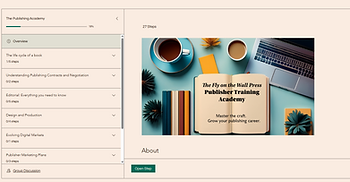
(Preview image of the online course!)

Your Action Plan
If you're serious about breaking into publishing, particularly on the editorial side, here's what you should do in 2026:
Focus your job search on roles with "assistant" after the department name. These are your best entry points as a graduate.
Build a list of literary journals and magazines that align with your interests. Look for publications that publish the kind of work you're passionate about.
Craft a concise, professional email explaining your interest in gaining editorial experience and what you can contribute. Attach your CV and be clear about your availability.
Be patient but persistent. Not every journal will respond, and some may not have capacity right now. Keep trying, and remember that even a few months of voluntary experience can significantly strengthen your applications for paid roles.
If you want clear guidance rather than guesswork, the Fly on the Wall Press Publishing Academy (finalist for an Excellence Award, FutureBook Awards 2025!) is designed specifically for people at this stage of their publishing journey.
The Academy gives you:
Structured, self-paced modules explaining how publishing actually works
Clear guidance on entry-level roles, experience routes, and progression
Twice-monthly industry talks (recorded if you can’t attend live)
Access to a student discussion space where questions are encouraged and answered
Practical insight drawn from real publishing practice, not theory
You can work through the course alongside existing jobs or commitments, at your own pace, with full access to all materials.
Code: newyeargetintobooks will get you £2 off your first month and full access to the entire online course modules, as well as the discussion group 😄 Expires midnight 4th of Jan!
If you’re serious about getting into publishing, and want to approach it with clarity rather than confusion, I’d love to welcome you.
Isabelle


